Death Guard Dreadnoughts
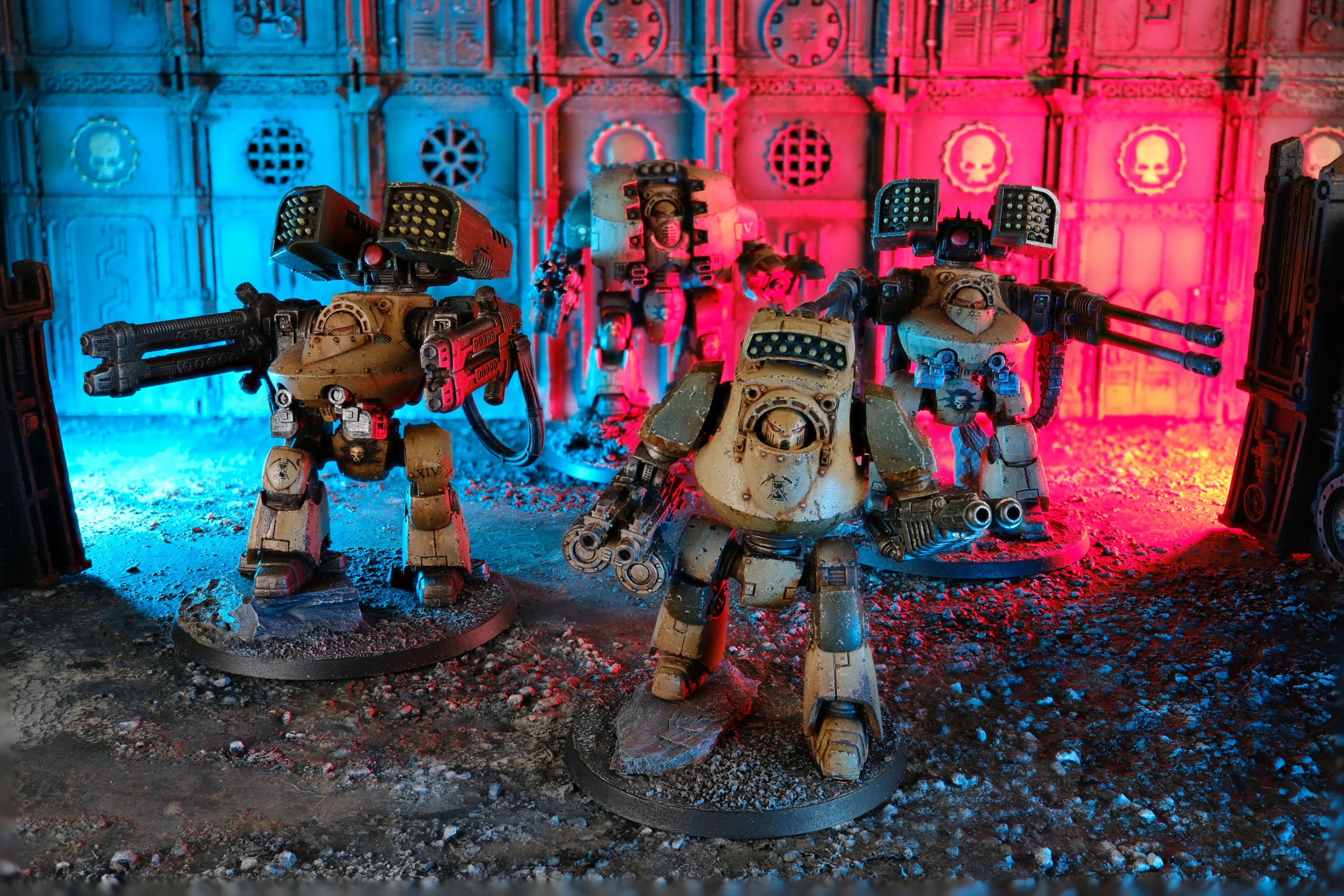
There’s a version of the Death Guard that gets overlooked. Not the bloated, plague-ridden servants of Nurgle that most people picture — the earlier one. The XIV Legion before the corruption, before Barbarus fully swallowed them, before Mortarion made his choice. They were already the grimmest legion in the crusade. Already endurance embodied, already defined by the refusal to stop. The rot hadn’t touched them yet. That’s the version I keep coming back to.
I play them as loyalists. The premise is simple: a Terran-born contingent — old Dusk Raiders stock, Albian-born — lost in the warp before Istvaan III. When they finally emerged, the Heresy was already underway. They came out of the warp to find their legion had become something unrecognisable, their primarch a traitor, their brothers the instruments of a massacre. They made the only choice that made sense. They sided with the Emperor and fought on.
It’s not a canonical story. But it doesn’t need to be. The Heresy is full of contingents separated from their legions by the warp, by circumstance, by choice. A Terran guard that never knelt to Mortarion fits comfortably in that space.
The Death Guard don’t fight clean wars. They grind. They absorb punishment that would shatter other legions and keep moving. Their dreadnoughts reflect that — not polished war machines, but relics that have been through campaigns they weren’t expected to survive. Battered hulls, corroded joints, and armour that has been repaired just enough to stay functional.
These three dreadnoughts aren’t kitbashed — they’re stock builds — but the work is in the surface detail. Battle damage, pitting, and accumulated grime do most of the storytelling.
Leviathan
The Leviathan is the centrepiece. It’s a brutal silhouette at the best of times, and the Death Guard aesthetic lends itself well to the bulk of it. There’s something satisfying about a machine this heavy looking like it’s been dragged through every siege since Ullanor.
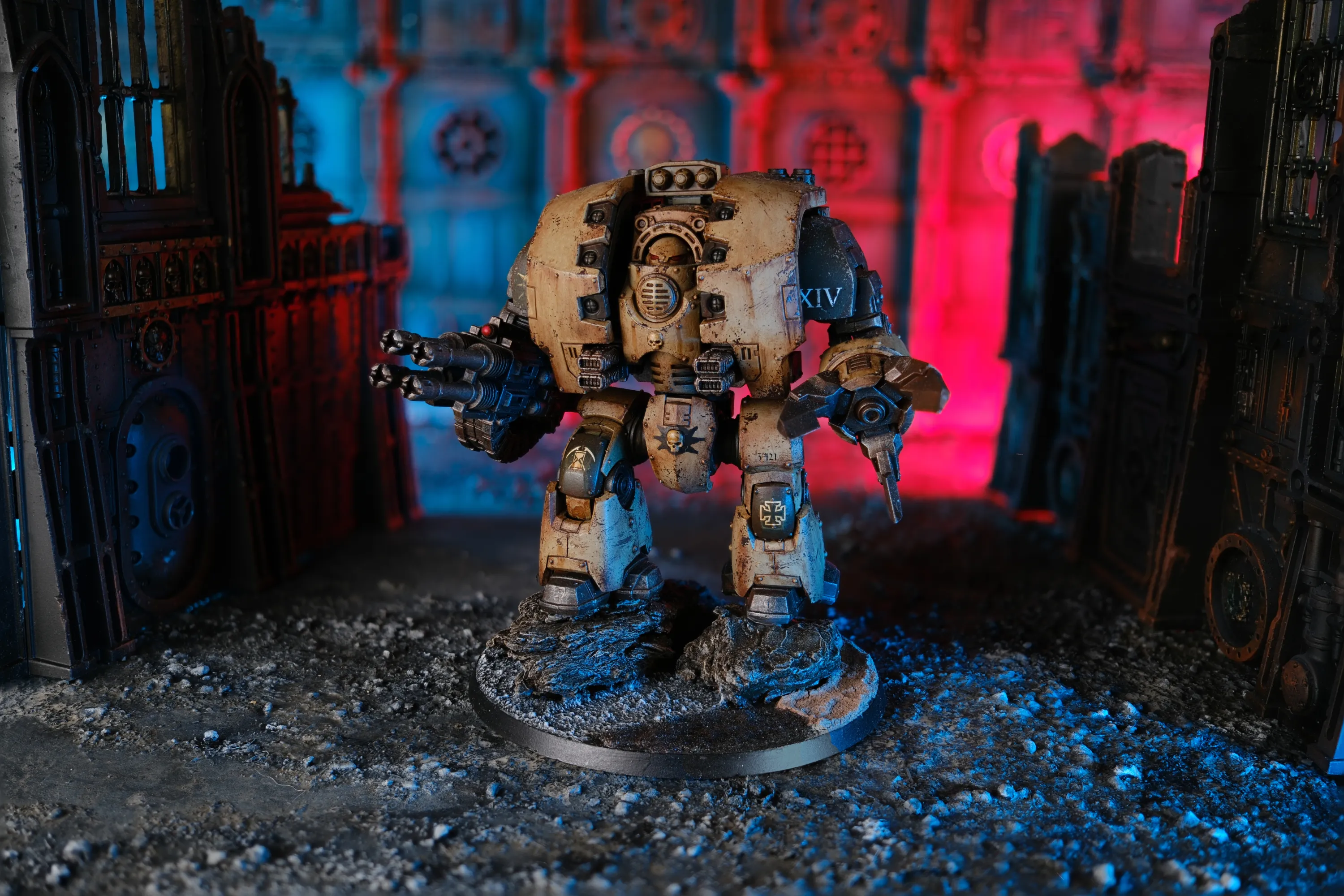
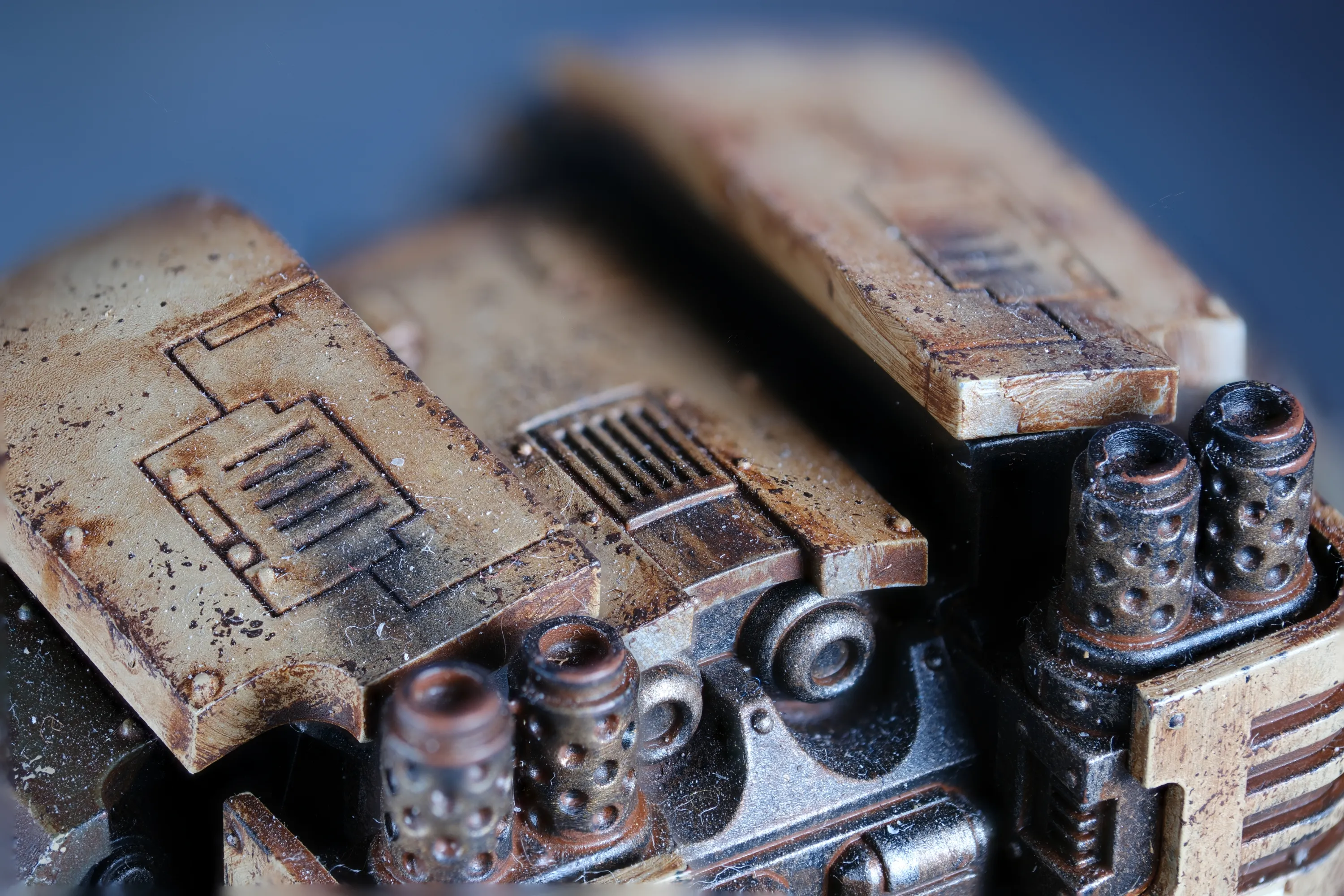
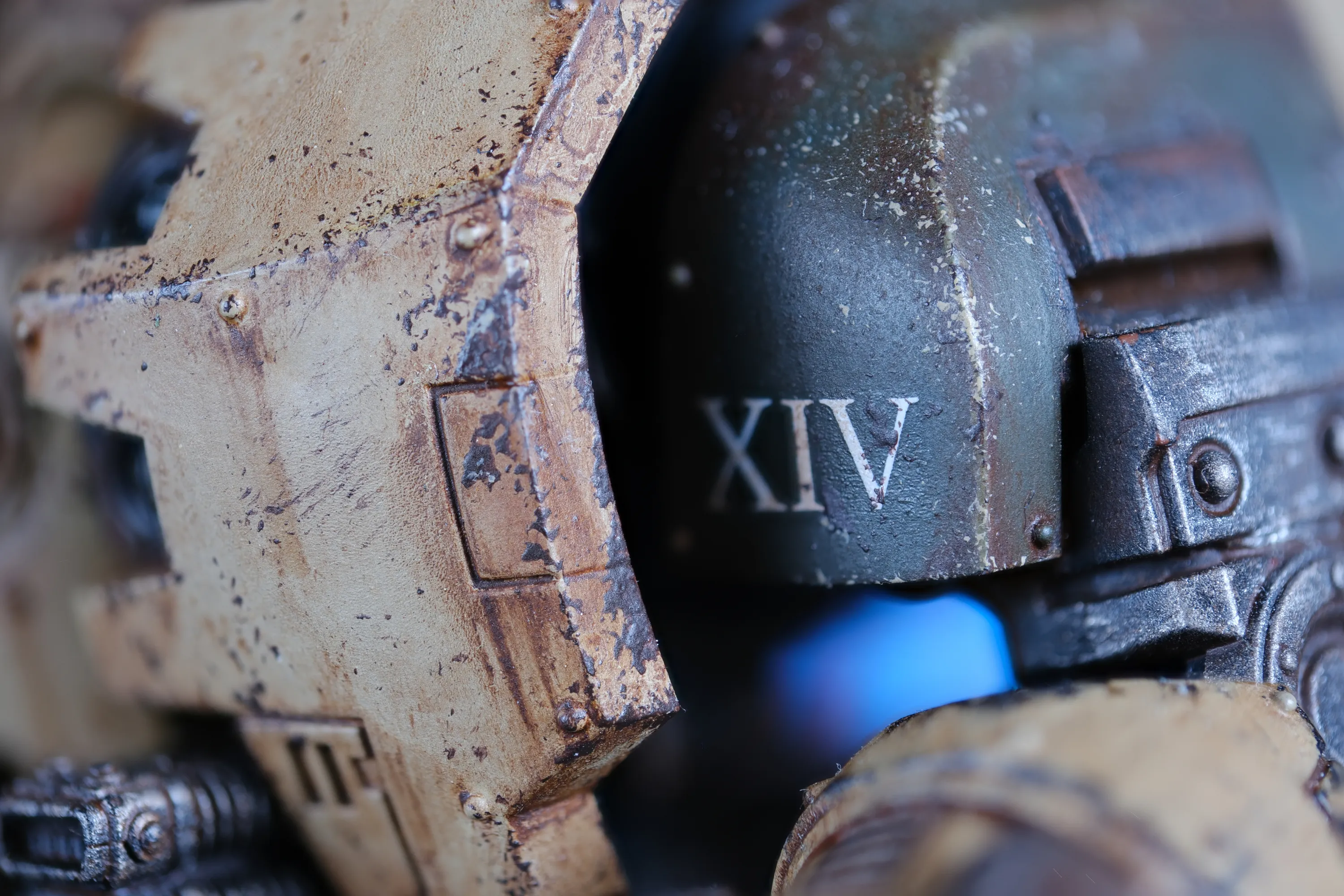
The detail work leans hard into surface degradation — chipped edges, scratches down to bare metal, and the kind of wear that suggests years in the field rather than weeks. None of it is accidental.
Deredeo
The Deredeo sits at an interesting point in the Death Guard arsenal. It’s a fire support platform, and there’s a tension in making something that precise look this decrepit. The answer is that the Death Guard maintain what matters. The weapon systems work. The rest is cosmetic.
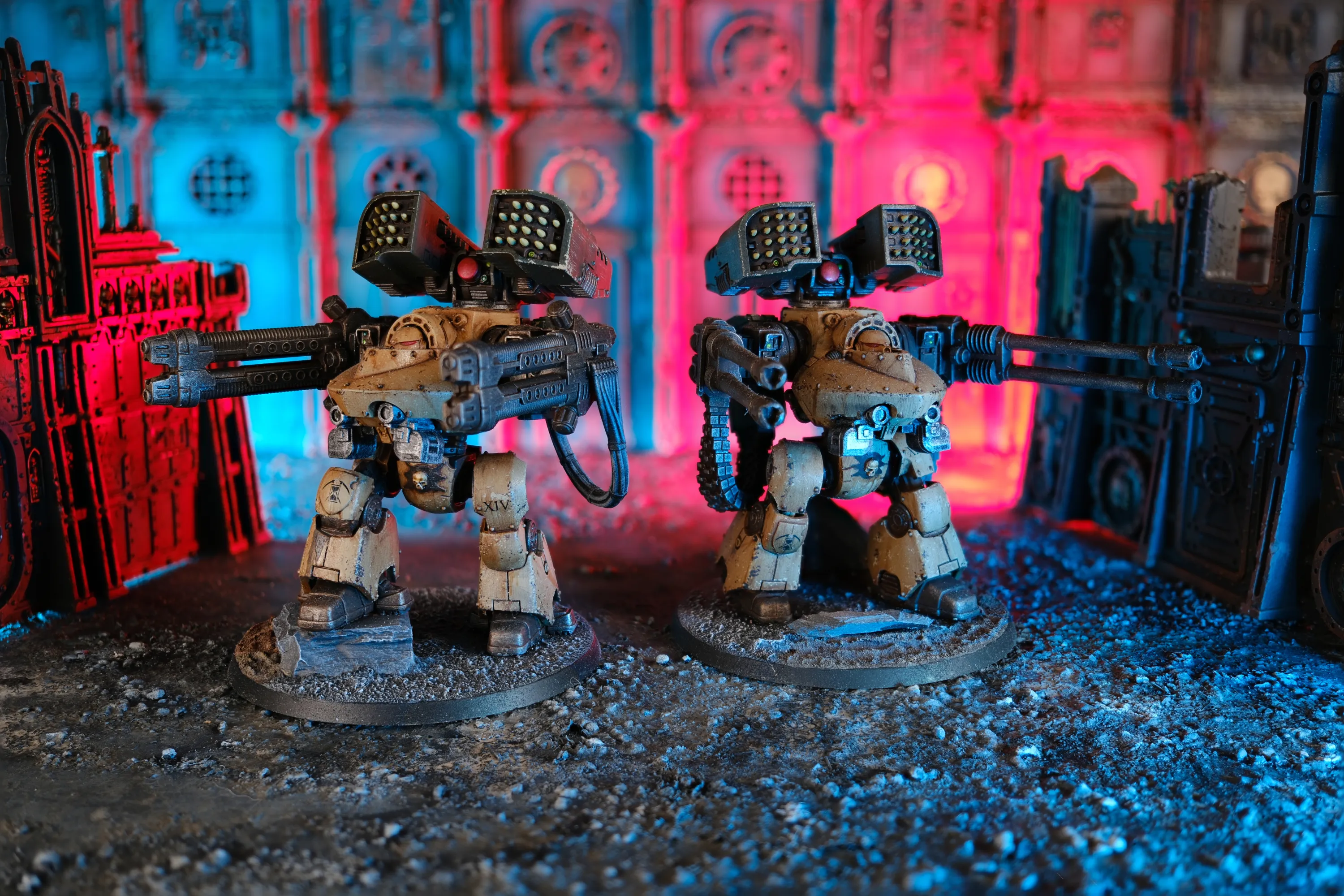
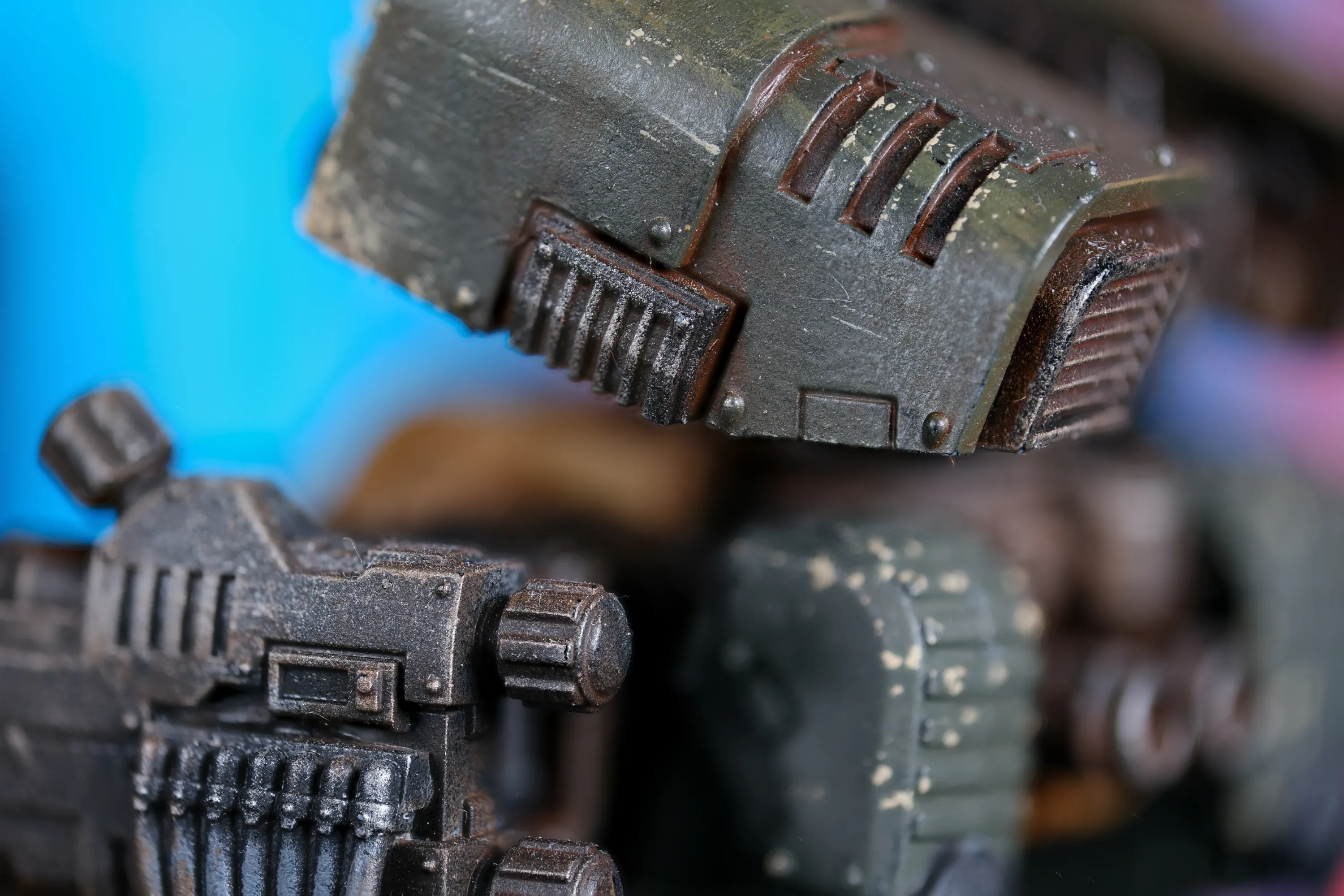
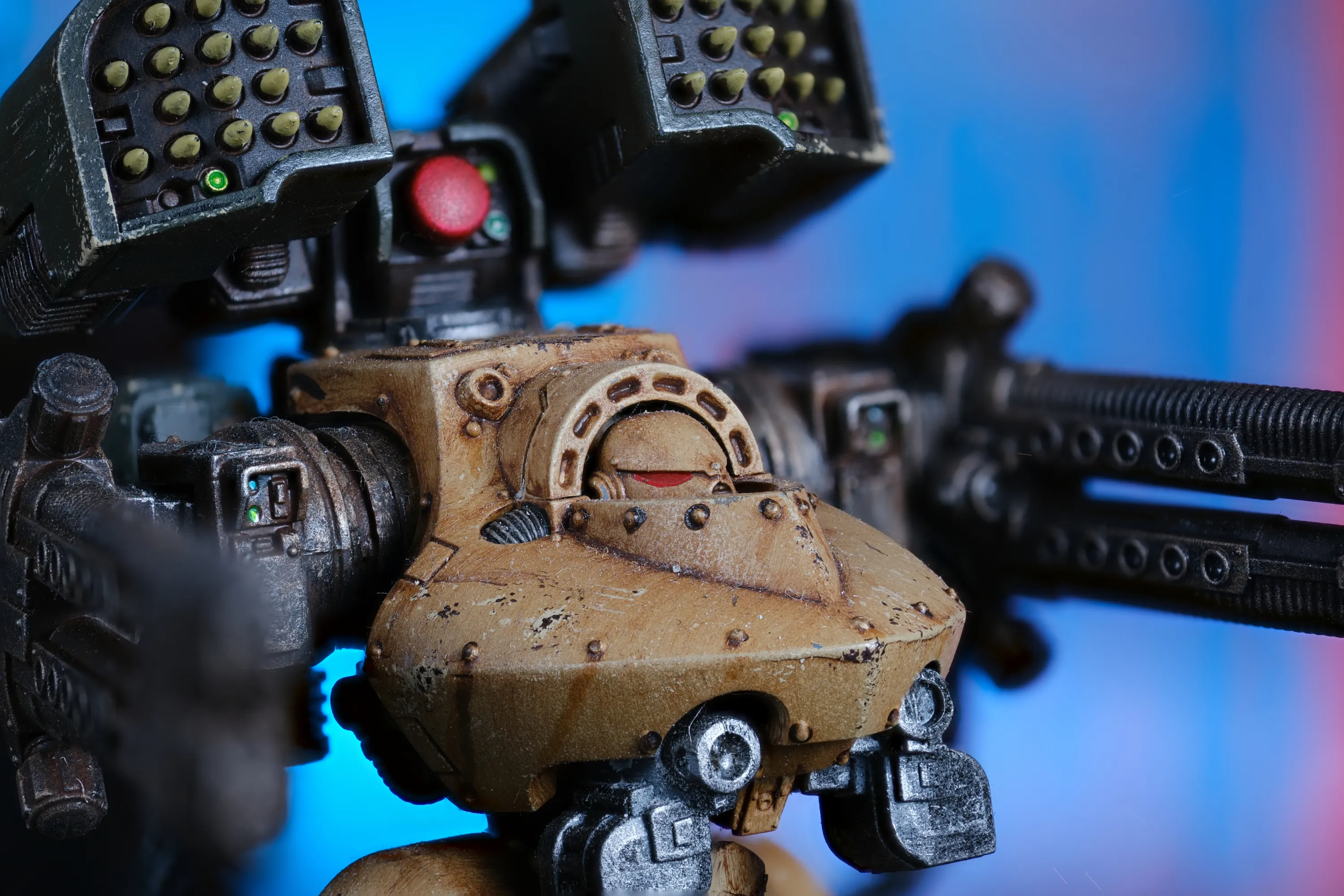
The damage here follows the same logic as the Leviathan — heavier wear on raised edges, grime pooling in recesses, and the overall sense that this machine has earned every mark on it.
Contemptor
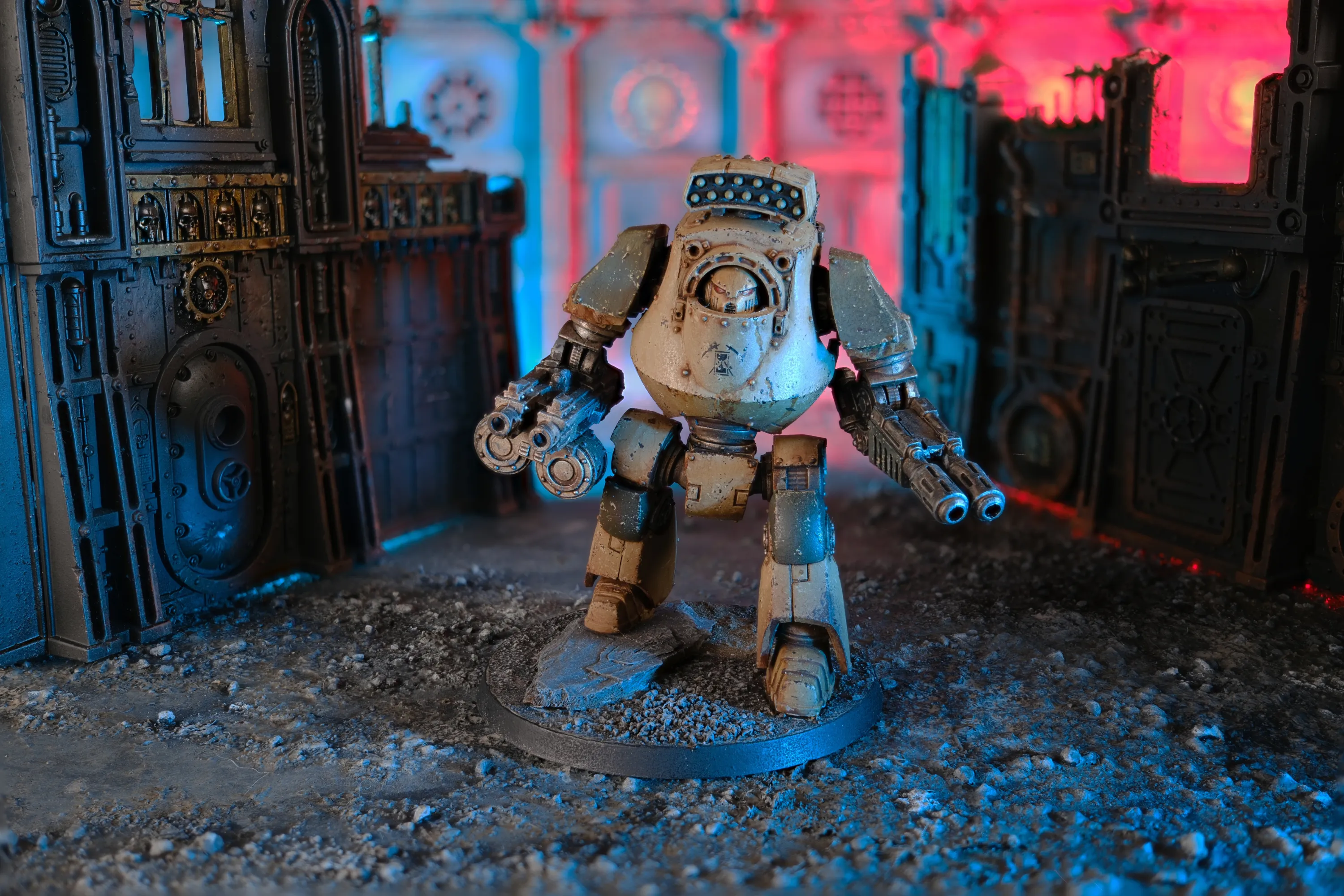
The Contemptor is the oldest of the three archetypes, and that history shows. It has a more elegant silhouette than the Leviathan, which makes the contrast with the weathering more pronounced. Clean lines underneath a lot of hard miles.
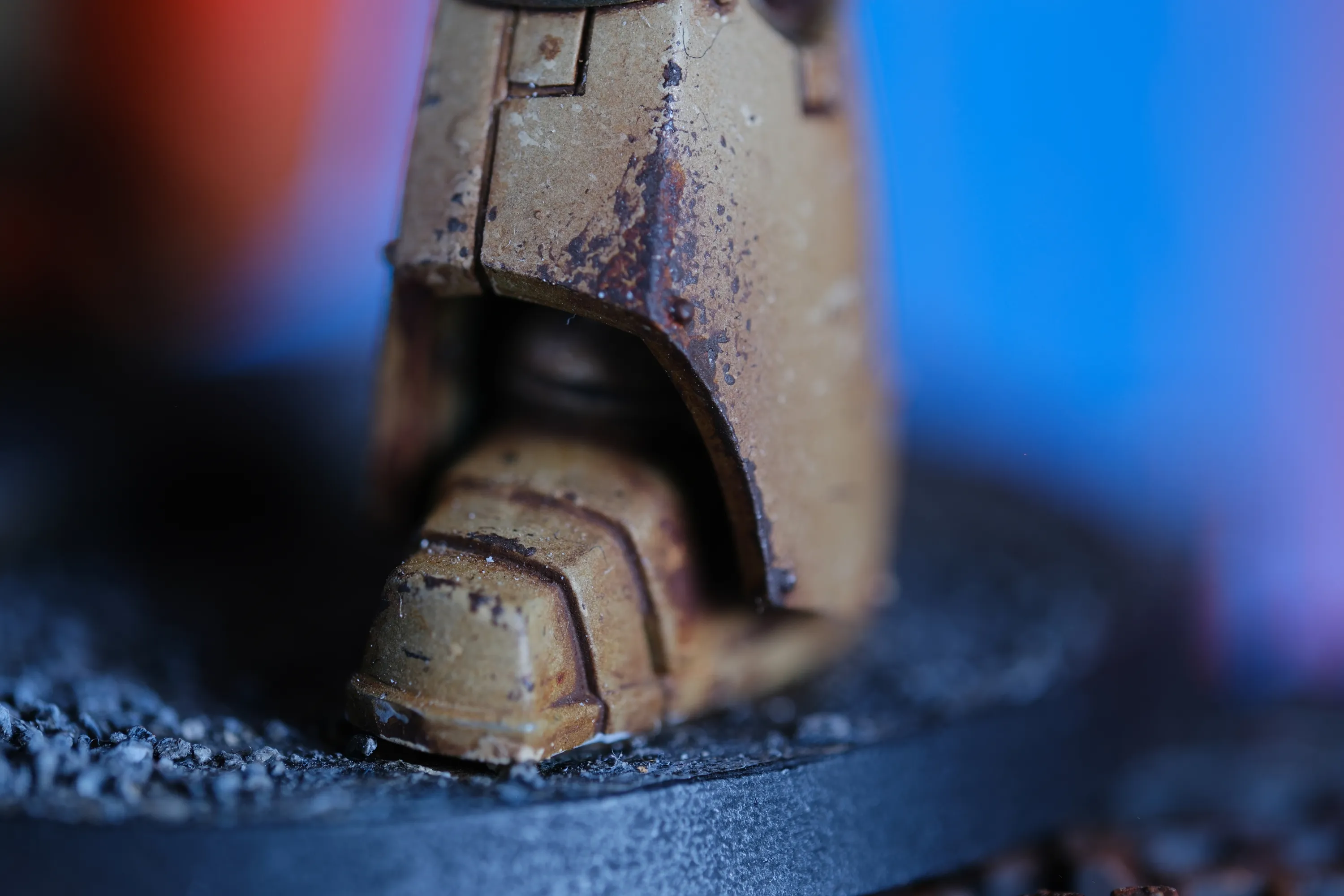
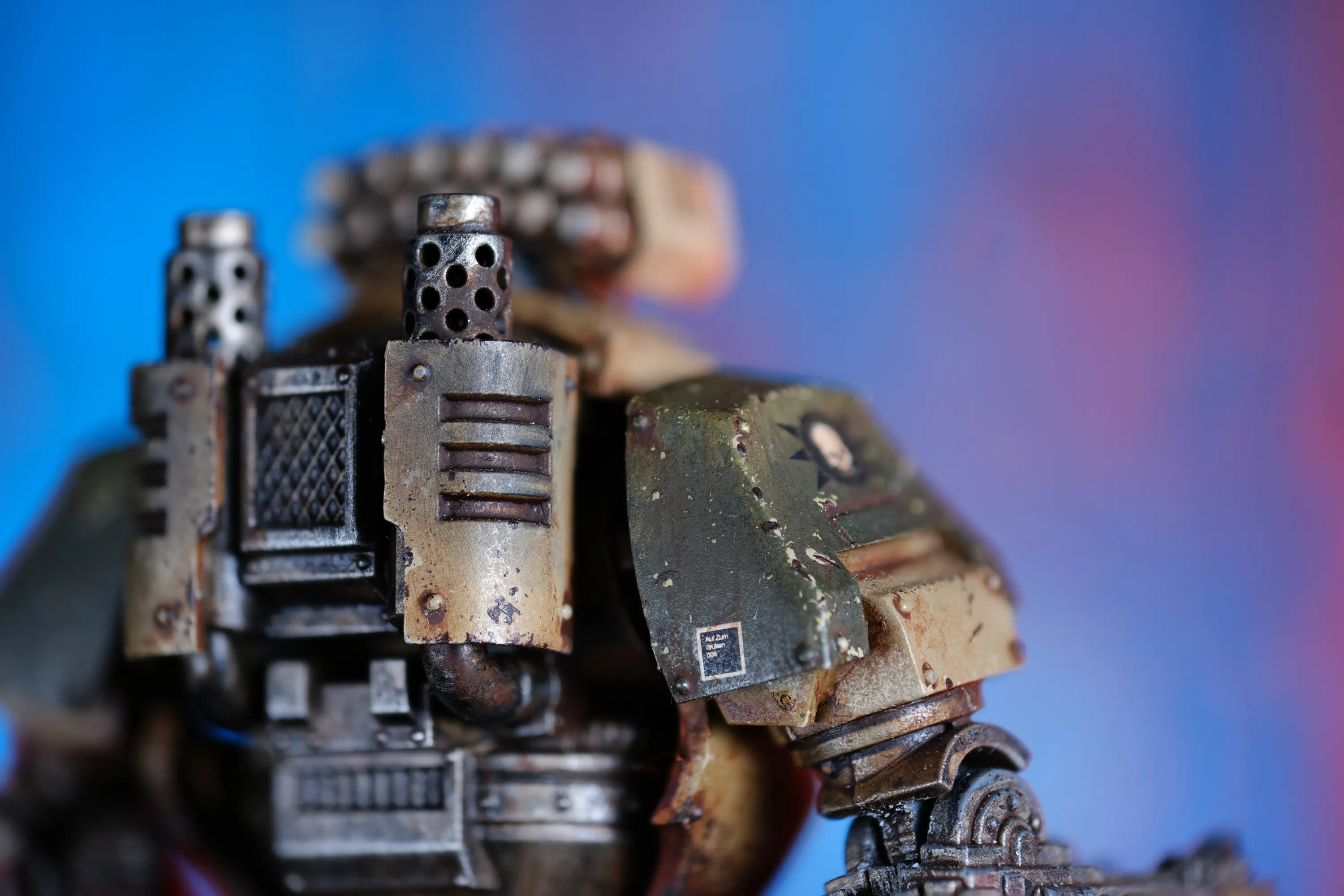
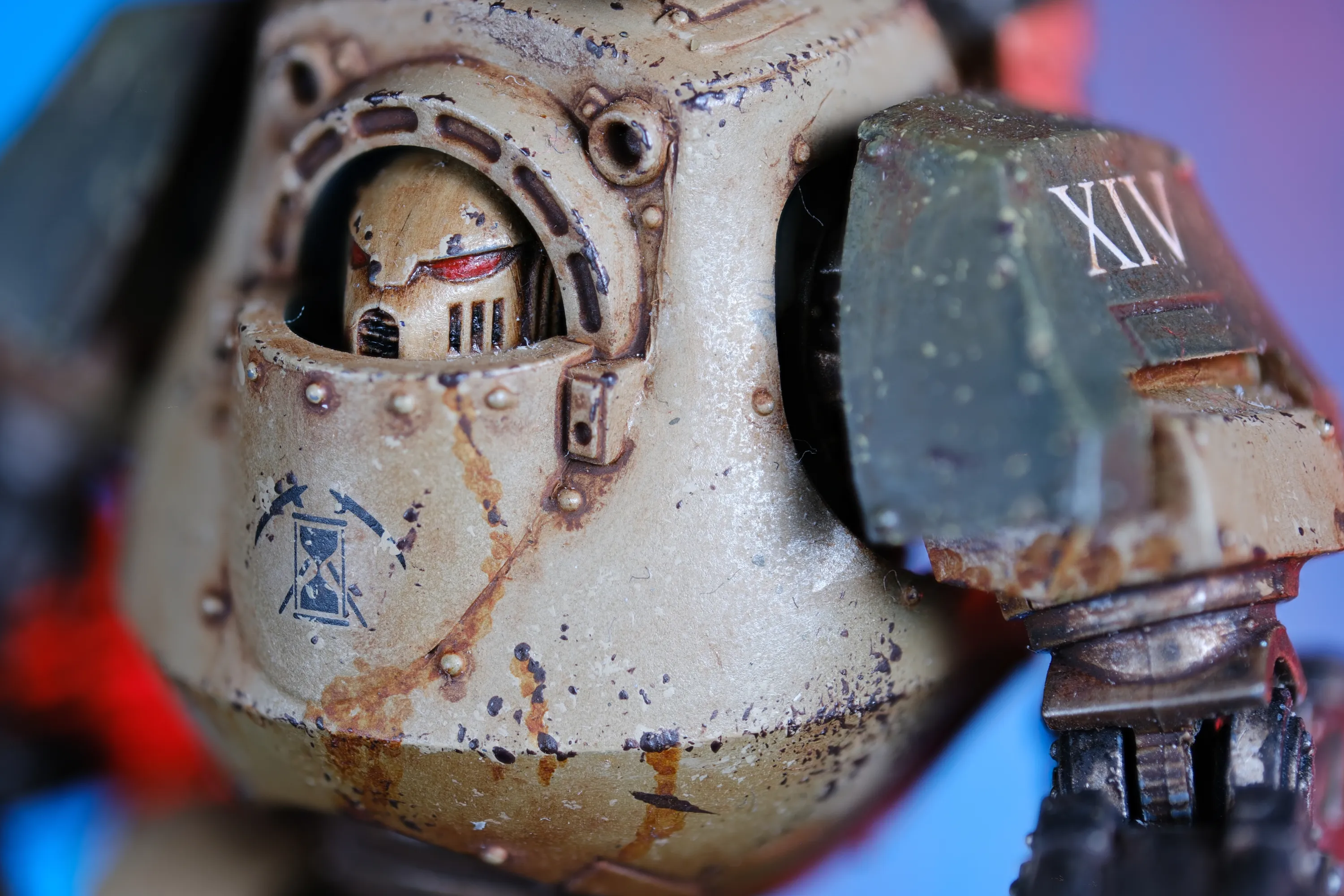
The weathering approach
The secret sauce across all three is Mr Hobby’s Mr Weathering Colour Stain Brown — an enamel wash that settles into recesses and shifts the whole read of a model. Applied over a matte varnish, it flows naturally into panel lines and detail pockets without flooding flat surfaces. Cleaned back with enamel thinner on a flat brush, it leaves grime exactly where grime should be.
The chipping comes after the wash — Monument Hobbies Dark Umber applied by sponge over the sealed surface. Once the chips are in, small highlights of the original light tan along the upper edges of each chip add dimension and stop them from reading as flat marks. It keeps the damage looking like stripped paint rather than stencilled texture. The Stain Brown lays the foundation, but those highlight slivers are what make the chips sit right.
The final layer is rust streaking — a thinned rusty red pulled downward from chips and joins in thin, irregular lines. Fresh rust water, not old dried crust. It implies that whatever exposed the bare metal underneath is still reacting, still bleeding. On a Death Guard model that reads as exactly right.